Monday was the first day that showed the basic Gatlinburg pattern: downtown energy in one direction, national park trailheads in the other, and a family trying to fit both into the same day without turning the vacation into a checklist.
Downtown Before the Trail
Gatlinburg downtown is dense in a way that is hard to explain until you walk it. It is not a large city, but it carries the volume of a much bigger destination. Attractions, restaurants, candy stores, mountain views, families, strollers, traffic, and pedestrians all compress into a narrow valley.
From a Northeast point of view, Gatlinburg feels unfamiliar because it belongs to a different vacation map. It is not the Jersey Shore, the Poconos, the Adirondacks, or the New England mountain towns. It is Southern Appalachian family-road-trip America: practical, busy, brightly signed, and completely comfortable with being built for visitors.
Walking downtown made that clearer than driving through it. From the car, Gatlinburg can look like a wall of signs and traffic. On foot, it becomes more legible. Families move in small clusters. Children point at storefronts. People stop for snacks, photos, souvenirs, and small attractions. The mountains keep appearing between buildings, which gives the town a strange visual double life: one moment you are looking at a busy sidewalk, the next you are reminded that a national park is right behind the scene.
The town is also more fun when you stop expecting quiet mountain-town behavior from it. Gatlinburg is not trying to be subtle. It is a place of bright facades, sweets, games, food, and quick decisions. For a family, that can be useful. Someone is always interested in something nearby, and the next option is rarely far away.
That could sound like criticism, but it is not. The town works because it does not pretend to be something else. It is a gateway, a base, and an entertainment strip, all at once.
The trick is balance. Too much downtown and the trip can start to feel like a crowd-management exercise. Too much hiking and the younger travelers can run out of patience. Monday was the first day we tried to hold both sides together: a little Gatlinburg energy, then a real Smokies trail.
Alum Cave Trail
The day’s main outdoor piece was Alum Cave Trail. This is one of the best-known hikes in Great Smoky Mountains National Park, but our version was not a summit push or a heroic hiking story. It was a family hike with a realistic turnaround.
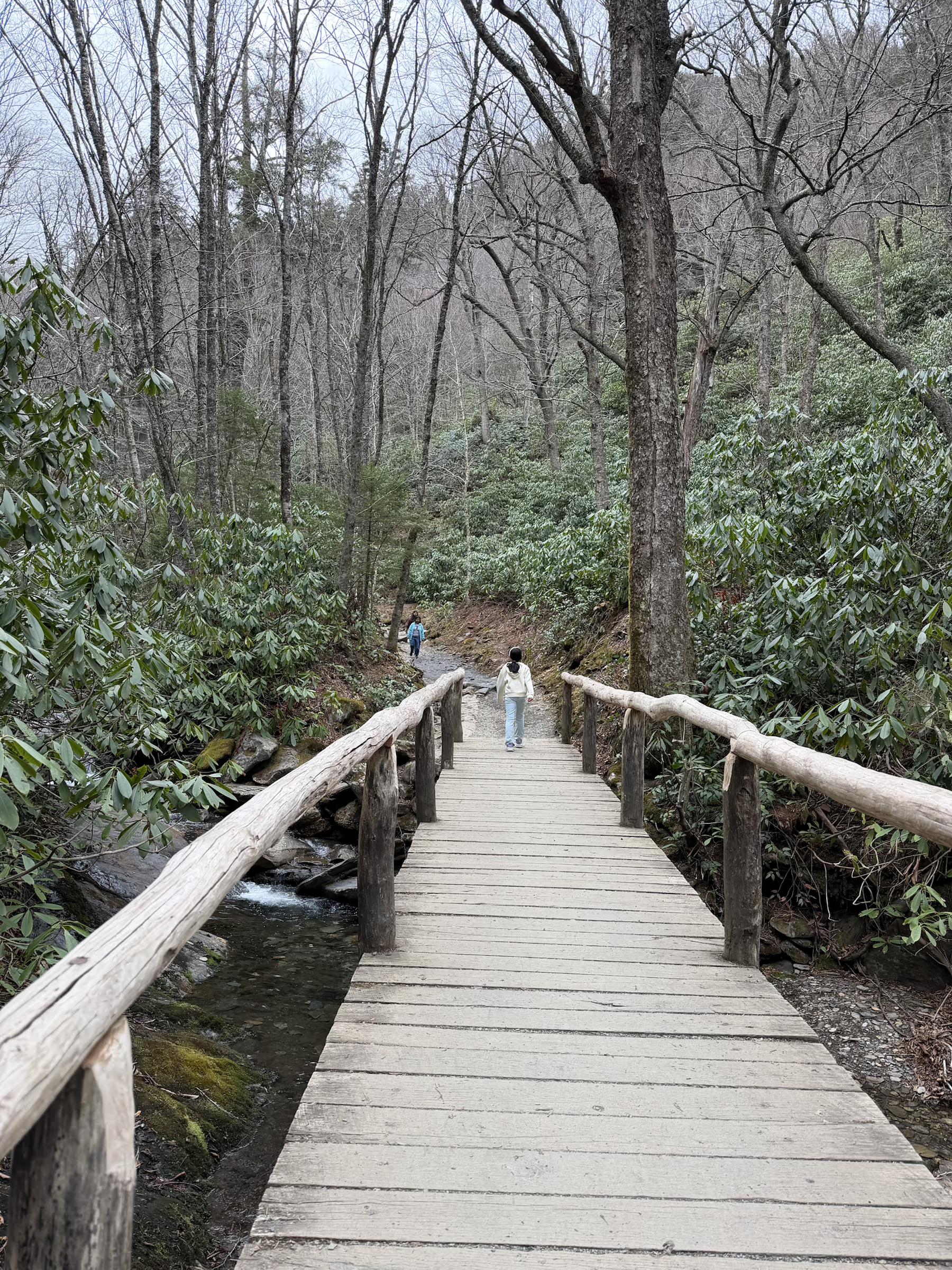
The trail begins in forest, follows water, crosses footbridges, and then starts to climb more seriously. The landscape becomes more dramatic as the elevation changes: rock faces, exposed sections, and views opening through the trees.
The early part of the hike was exactly what I hoped a family Smokies trail would feel like: wooded, active, and interesting almost immediately. The creek kept the walk lively. The bridges gave the children something concrete to remember. The trail was busy enough to feel shared, but not so crowded that it lost the forest.
Then the climb began to announce itself. The path stopped feeling like a simple walk and started feeling like a negotiation with energy. That is where family hiking becomes honest. Some people want to keep going, some people slow down, someone needs water, someone wants a photo, someone asks how much farther. The hike becomes less about the map and more about reading the group.
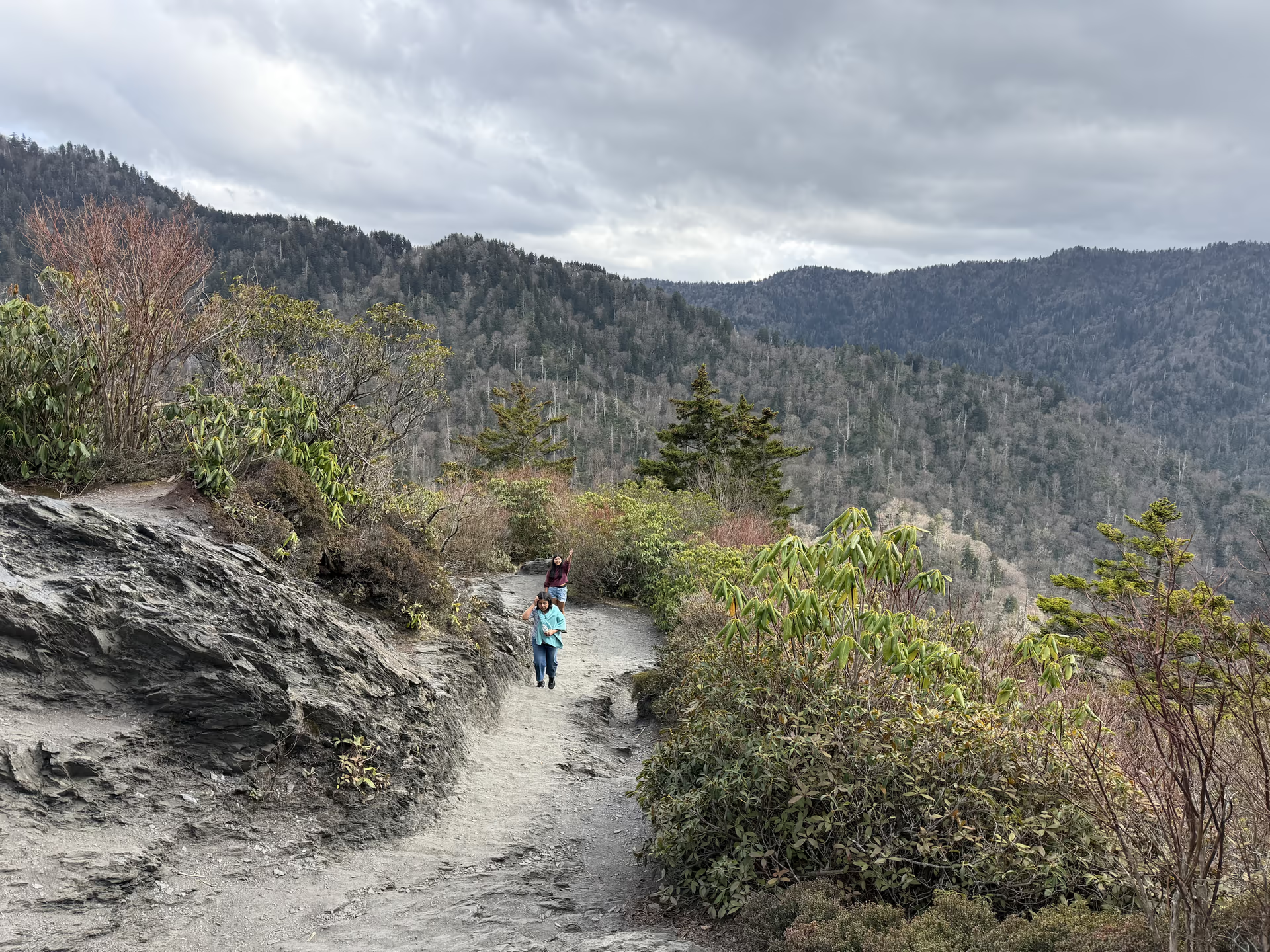
We turned back around the 1.9 to 2.0 mile viewpoint, likely Inspiration Point. That turned out to be the right decision. The point of the day was not to force the full route. It was to get enough of the trail to feel the Smokies on foot, then return with the family still intact and the rest of the week still ahead.
The viewpoint made the turnaround feel complete rather than like a failure. The trail opened enough to show the mountains, the rock, and the elevation gained. We had earned a view, taken the photos, felt the change from creekside forest to exposed mountain path, and reached the natural limit for the day.
That is one of the lessons I keep relearning on family trips: the best stopping point is not always the official endpoint. Sometimes the right endpoint is where the memory is already strong and the mood is still good. Pushing beyond that can turn a good hike into a story about exhaustion. Turning back at the right time keeps the day available for everything else.
- Trail: Alum Cave Trail in Great Smoky Mountains National Park.
- Family turnaround: around the 1.9 to 2.0 mile viewpoint.
- Likely landmark: Inspiration Point.
- Best memory: the shift from forest walk to mountain view.
The day ended with a better understanding of Gatlinburg’s appeal. You can have breakfast in a crowded tourist town, walk a mountain trail by afternoon, and still be back downtown by evening. That combination is unusual, and it is the real engine of the place.
Monday did not feel light. It felt layered. Downtown gave us the noise and movement of the place; Alum Cave Trail gave us the mountain seriousness behind it. By evening, I understood the Gatlinburg rhythm better. The town is not competing with the park as much as feeding off its proximity. You can move between the two worlds quickly enough that both remain part of the same day.
That is what made the trip start to feel different from a standard national park visit. In many parks, the gateway town is where you sleep and refuel. Here, the gateway town is its own character, and the family has to decide each day how much of that character to invite in.
Part Four spends a full day at Ober Mountain.
Community Thoughts
Loading comments...